|
|

|
Research Ultracold atom systems provide a new approach to the investigation of strongly correlated materials, quantum information and quantum chaos. Quantum gas samples can be prepared in a fully controlled way to directly simulate interesting model systems of quantum phenomena. For example, fermionic atoms in optical lattices, modeling electrons in crystal, realize a model system with Fermi-Hubbard Hamiltonians. The Fermi-Hubbard models are commonly believed to describe many phenomena such as the metal-insulator transition and high-temperature superconductivity. Complete control of experimental parameters (e.g. in the lattice models, interaction strength and tunneling rate) and the spectroscopic precision of atomic physics make the ultracold atom systems ideal for direct examination of many theoretical predictions. In a sense, highly controlled ultracold atom experiments represent quantum analog simulation of quantum phenomena. Here, we propose experimental and theoretical study of quantum systems using ultracold atoms in the following areas, focusing on strongly interacting many-body physics, quantum information and quantum chaos. Fermionic Superfluidity
Quantum Chaos Studies with BEC
Cavity-QED and Quantum Information with BEC
SNU
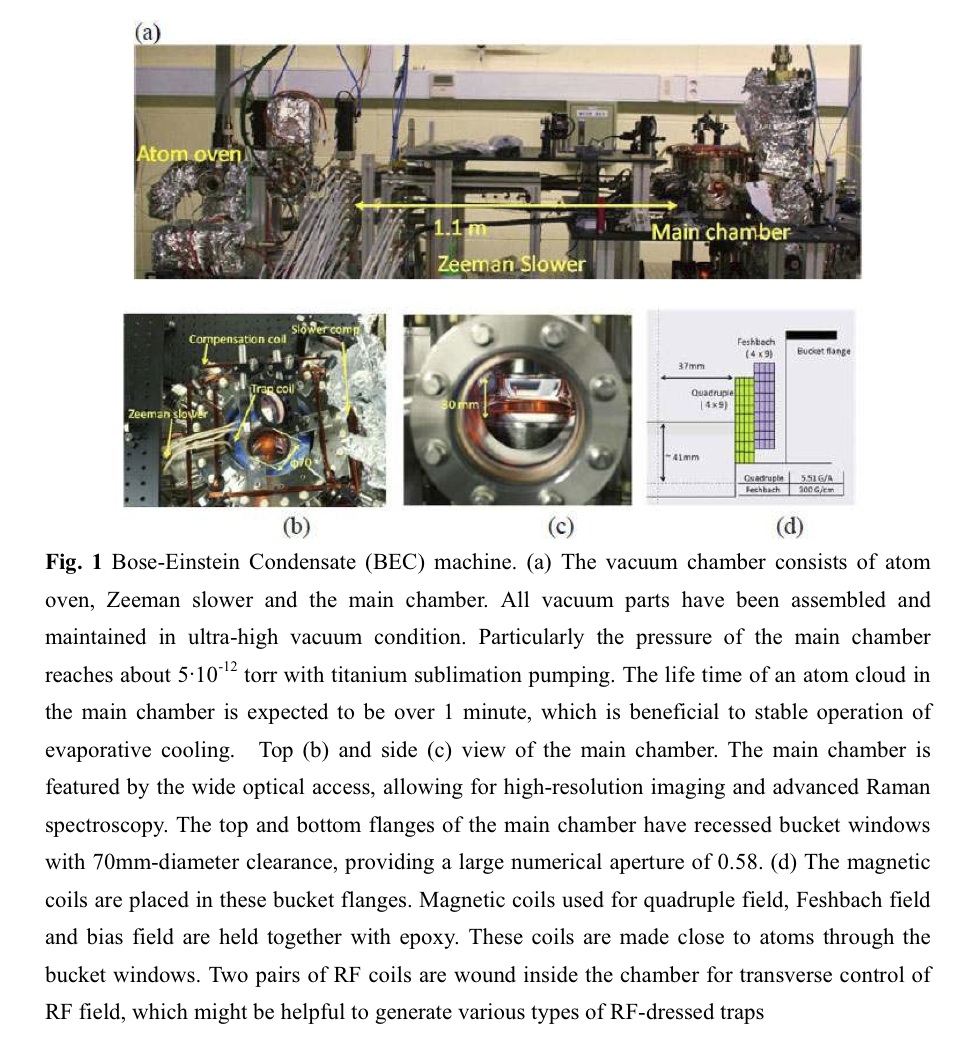
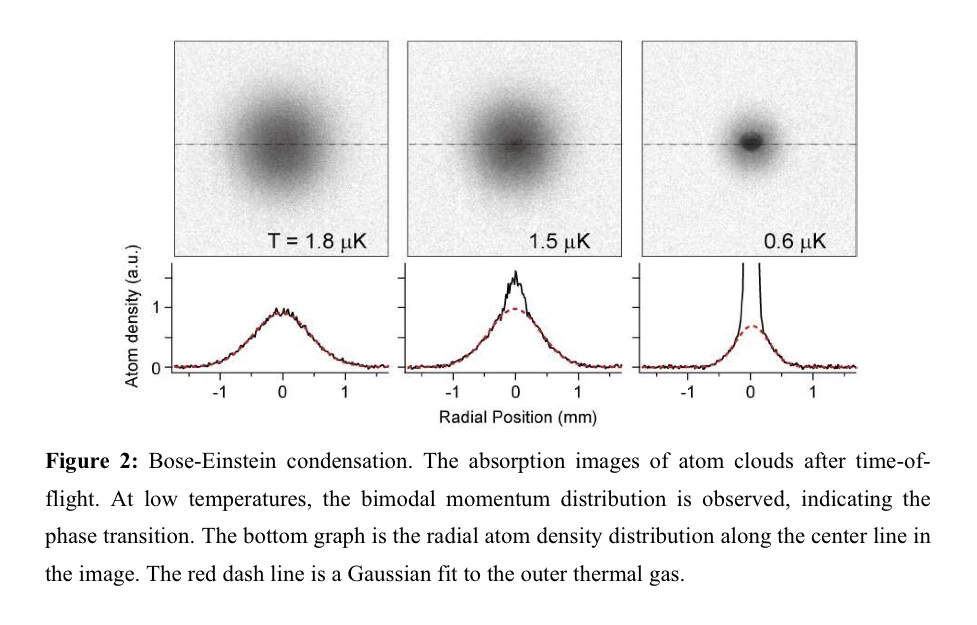
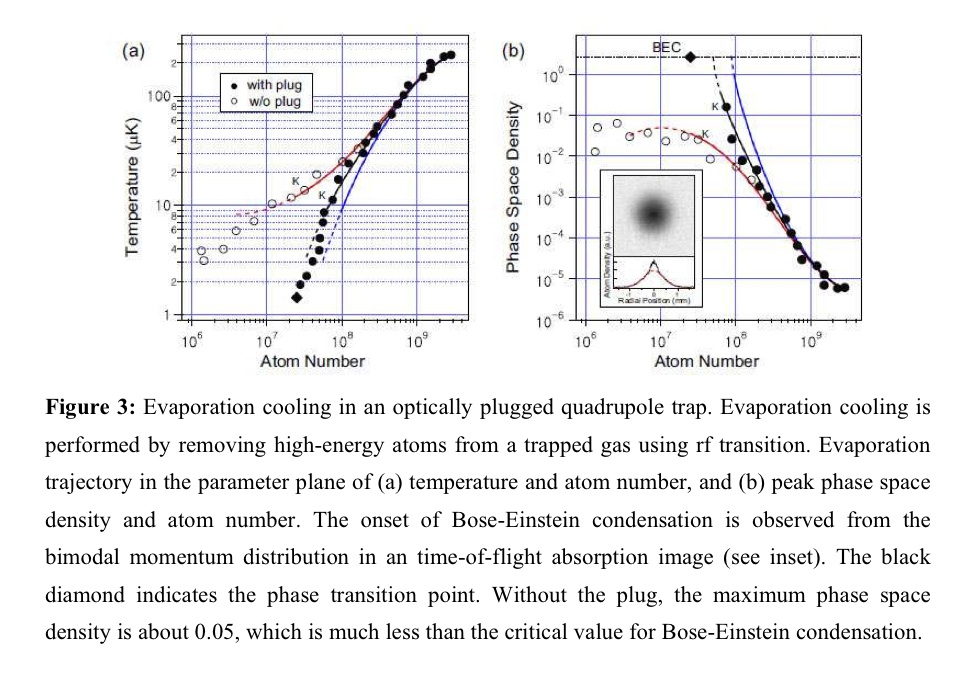
BEC group has constructed a new experimental apparatus for BEC
production and has recently succeeded in observing the first BEC in
Korea. This achievement fully accomplishes the primary goal of the
starting phase, providing a solid platform to launch the second-phase
program for BEC
applications (see the above slides).
|
|
|